
Biohacking
The Supplement Stack for Focus and Energy That Isn't Just Caffeine
How to actually stack supplements for focus and energy: what combines, what cancels out, dosing order through the day, and how to test one addition at a time.
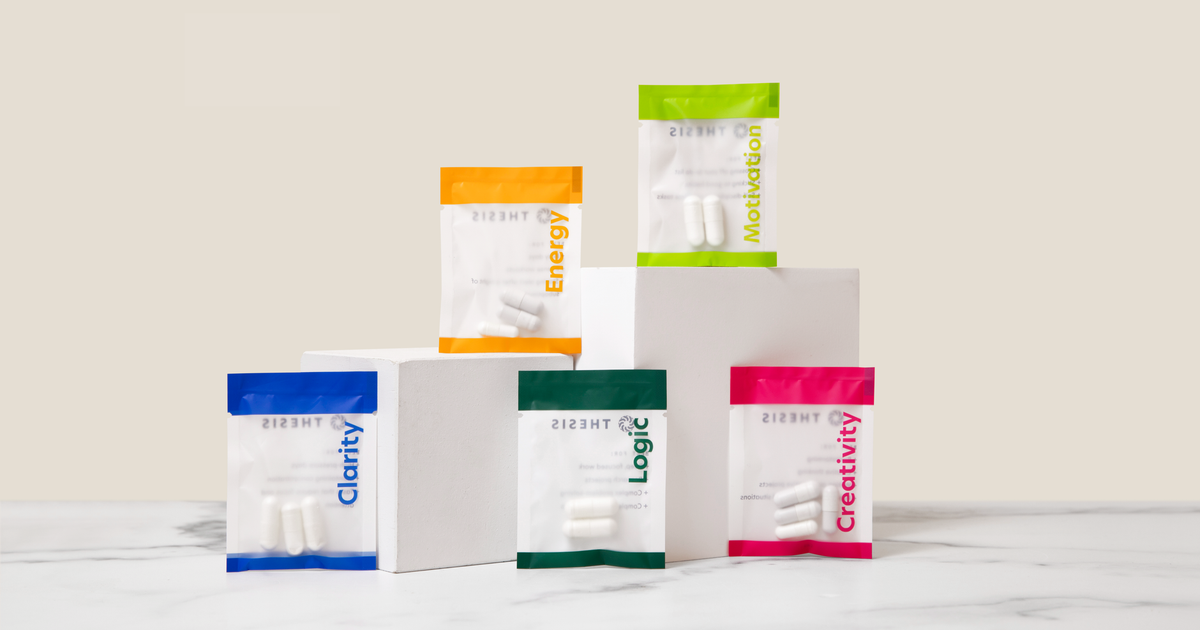
Most "focus and energy" stacks are caffeine plus four ingredients that do nothing for you specifically. The actual work isn't picking new ingredients. It's sequencing the few that matter. Know which two cancel each other out, and test additions one at a time instead of dumping a whole stack in at once. This is the stacking layer on top of the ingredient-by-ingredient reviews I've already published.
Medical disclaimer. I am not a physician. This page is personal experimentation and general information, not medical advice. Combining supplements carries interaction risks a blog post cannot screen for. This is especially true for minerals and anything taken alongside prescription medication. Talk to your doctor before starting or combining supplements.
Bottom Line. (1) Build the stack in layers, cheapest and best-evidenced first: caffeine, then L-theanine, then creatine. Everything past that is conditional on a deficiency you should test for, not assume. (2) Iron and calcium each blunt the other's absorption. Coffee or tea can cut iron absorption by roughly half. Space these by at least one to two hours; never take them together. (3) Dosing order through the day matters more than most stack marketing admits: stimulants early, minerals away from coffee and tea, nothing sleep-disruptive after early afternoon. (4) Add or change one variable at a time. Hold it two to four weeks before judging it — changing five ingredients at once tells you nothing about which one worked. (5) My own stack is smaller than this article: caffeine and creatine, nothing else, because I haven't tested positive for a deficiency that would justify more.
In this article:
- Why "Focus and Energy" Stacks Are Mostly Caffeine and Filler
- Layer 1: The Floor — Caffeine, With or Without L-Theanine
- Layer 2: What Actually Stacks on Top Without a Fight
- Where Stacks Cancel Themselves Out
- Dosing Order Through the Day
- Testing One Variable at a Time
- What the Full Stack Actually Costs, Layer by Layer
- What I Actually Take, and What I Don't
- Frequently Asked Questions
Why "Focus and Energy" Stacks Are Mostly Caffeine and Filler
Search "supplements for focus and energy" and most results are a proprietary blend. Caffeine, a B-vitamin complex, an adaptogen, sometimes a mineral, all in one capsule at a markup over the two ingredients that actually do something. I've already ranked the individual ingredients by evidence tier and cost in the best supplements for energy, ranked. If your goal is targeted cognitive performance rather than general energy, nootropics for focus, graded by evidence covers that narrower list. This piece assumes you've read one of those and know what's worth taking. The question here is different: once you've picked two or three ingredients, how do you run them together?
That's a sequencing and interaction question, not an evidence-tier question, and it's the part most "stack" content skips entirely.
Layer 1: The Floor — Caffeine, With or Without L-Theanine
Caffeine is the base layer for a reason: it has the deepest evidence base of anything on this list and costs almost nothing. Want the RCT-level detail on dose and effect size? I cover it in the ranked supplements piece instead of repeating it here. For stacking purposes, what matters is simpler: caffeine is the only ingredient here that reliably does something for almost everyone. That's why every other layer gets added on top of it, not instead of it.
L-theanine is the one addition to that floor worth paying for if caffeine alone gives you jitters or a crash. It's not a separate ingredient on its own schedule — it rides along with each caffeine dose. Dose it at roughly 100-200 mg of theanine per 100 mg of caffeine — a 1:1 to 2:1 ratio. That's the range used in the trials behind the combination (Nutrition Reviews, May 2025). Treat Layer 1 as one decision, not two: caffeine alone, or caffeine-plus-theanine, based on how you tolerate the first.
Layer 2: What Actually Stacks on Top Without a Fight
Creatine monohydrate is the cleanest addition to the caffeine floor because it doesn't compete with anything. It works through a completely different pathway: cellular energy buffering rather than adenosine receptor blocking. There's no known interaction, no timing conflict, and no reason to separate it from your caffeine dose. I cover the cognitive evidence and dosing in creatine beyond the gym. The stacking takeaway is simpler: add it daily, at any consistent time. Don't expect it to interact with layer 1 in either direction.
B12 stacks the same way, conditionally. If a blood test shows you're actually deficient, correcting it doesn't fight caffeine, theanine, or creatine in any documented way. The full case for testing before buying is in B12 for energy. The stacking rule is the one that differs from creatine: don't add B12 by default. Add it only after a test result tells you to, then treat it as a non-interacting layer once you do.
Where Stacks Cancel Themselves Out
This is the part generic "best supplements" lists never cover, because a ranked list doesn't need to. Two things that each work fine alone can still blunt each other when combined in the same window.
Iron and coffee or tea. Coffee or tea taken close to an iron dose can cut non-heme iron absorption by roughly half (NIH Office of Dietary Supplements, Iron — Health Professional Fact Sheet, retrieved Sept. 2026). A gap of about an hour largely avoids the effect. If your stack includes caffeine as the floor and iron as a tested-deficiency addition, that's a direct scheduling conflict, not a minor one.
Iron and calcium. Calcium doses of 1,000 mg or more reduce non-heme iron absorption by close to half in controlled studies. That's why NIH's Office of Dietary Supplements recommends taking calcium and iron supplements at different times of day, not together. If magnesium or a multivitamin in your routine also carries calcium, check the label before assuming iron and your mineral stack play nicely.
Magnesium and your evening stimulant window. Magnesium's best-supported case is sleep-linked, not a direct energy effect — I go through the form-by-form evidence in magnesium for energy and sleep. The stacking conflict isn't a chemical interaction; it's a scheduling one. If you're taking magnesium in the evening for its sleep benefit, don't also stack a stimulating ingredient into that window. It'll fight the exact effect you added magnesium for.
Caffeine, full stop, late in the day. No ingredient in this stack does more damage to next-day energy than caffeine taken too late disrupting the sleep everything else depends on. Every other interaction in this section is a partial absorption loss; a bad night's sleep undoes the entire stack.

Dosing Order Through the Day
Sequencing the layers above into an actual day looks like this, assuming a standard wake-and-sleep schedule:
- Morning (with or shortly after breakfast): Caffeine, plus L-theanine if you're using it. This is the floor, and it's the only layer with a real "start here" urgency.
- Late morning to early afternoon: Creatine, with a meal, at whatever time you'll actually remember daily — consistency matters more than the clock hour.
- Midday, away from coffee or tea: Iron, if a test confirmed you need it, ideally a full hour separated from your last caffeine dose and from any calcium-containing supplement or dairy-heavy meal.
- Afternoon cutoff: Stop new caffeine intake by early-to-mid afternoon for most people, earlier if you're sensitive — this protects the sleep the rest of the stack depends on.
- Evening, if used: Magnesium, on its own, away from the day's stimulant window, dosed for its sleep-supportive case rather than an energy case.

Testing One Variable at a Time
The single-subject research literature has a name for this discipline: N-of-1 trials. A December 2024 methodology paper describes them adapted into digital, self-tracked formats for physiology research (arXiv preprint, Digital N-of-1 Trials and Their Application in Experimental Physiology, Dec. 2024). The design isolates one intervention's effect within one person, rather than averaging across a group. The core principle transfers directly to a supplement stack. Change one thing, hold everything else constant, and give it long enough to show an effect before you decide.
In practice, that means:
- Start with the floor (caffeine, with or without theanine) and run it alone for two to four weeks before adding anything.
- Add one layer at a time — creatine next, then only a tested-deficiency mineral if one applies to you.
- Hold the new variable for two to four weeks before judging it. Creatine's cognitive effect, in particular, doesn't show up in days; the trials behind it ran for weeks, not one dose.
- Track one consistent measure across the whole window — a wearable's subjective energy or focus rating, a simple daily 1-10 log, whatever you'll actually keep up — rather than switching what you're measuring mid-test.
- Don't add the next layer until you've decided on the last one. Adding two things in the same week is the single most common way people ruin their own N-of-1 data.
This is the same discipline that runs the rest of biohacking for me: one change, one measurement window, one decision, before the next change.
What the Full Stack Actually Costs, Layer by Layer
The ranked supplements piece prices each ingredient individually. What that view leaves out is the cumulative cost of running them together. That's the number that actually matters when you're deciding how many layers to add.

The floor costs almost nothing. Every layer past creatine is conditional spending that should follow a test result, not a marketing claim. It's the same logic continuous glucose monitoring applies to metabolic data: measure the actual gap before you pay to close one that might not exist.
What I Actually Take, and What I Don't
I take caffeine and creatine. That's the entire stack. I haven't added L-theanine because I don't get jittery on coffee at the doses I use. I haven't tested deficient on B12, iron, or magnesium, so I don't take any of them on spec. Rhodiola and CoQ10 aren't in my stack at all. Both have narrow use cases — endurance training load and statin-associated muscle pain — that don't apply to me.
Personal data — pending measurement. This section will carry my own N-of-1 log from the next time I add a layer to this stack: which ingredient, the two-to-four-week hold period, the measurement method (Oura-logged subjective energy rating, once-daily), and the before/after comparison. Not filled in yet; I publish it once I've actually run the test, not before.
Frequently Asked Questions
Can I just take my whole stack at once in the morning? For the non-interacting layers — caffeine, theanine, creatine — yes, there's no known reason to separate them. Iron is the exception: keep it away from your caffeine dose and any calcium-containing supplement by at least an hour.
Does creatine interact with caffeine at all? No documented interaction at standard doses. They work through different pathways, which is exactly why creatine is the easiest layer to add on top of a caffeine floor.
How long should I test a new addition before deciding if it's working? Two to four weeks minimum, longer for anything with a slow-building effect like creatine. Judging a supplement after three days is judging noise, not signal.
Do I need to cycle off any of these? Caffeine tolerance builds within days regardless of cycling; creatine has decades of continuous-use safety data at standard doses and doesn't require cycling. Iron and B12 should only be run as long as a retest confirms you still need them.
This is the same test-before-you-stack approach that runs every other piece in this cluster. Find the base layer that works for almost everyone. Add conditional layers only after a real test says to, and never change more than one thing at a time. Caffeine plus creatine is the floor for most people. Everything past that is a deficiency question, not a shopping question.
About this guide. Written by Nate Harmon, an operator and self-experimenter documenting personal protocols in biology for Peak Human Ops. Not a physician or a licensed adviser. Sources are tier 1-2 government and peer-reviewed references, each linked inline with a publication or retrieval date. Nothing on this page is sponsored, and there are no affiliate links on it. How this site is written and corrected is set out in the editorial policy and the corrections log. Who is behind it is on the about page, and you can contact me directly.