
Biohacking
Cold Plunge Benefits: What's Real, What's Overstated
The actual evidence behind cold plunging: mood and alertness effects are real and fast, but the fat-loss and testosterone claims aren't supported.
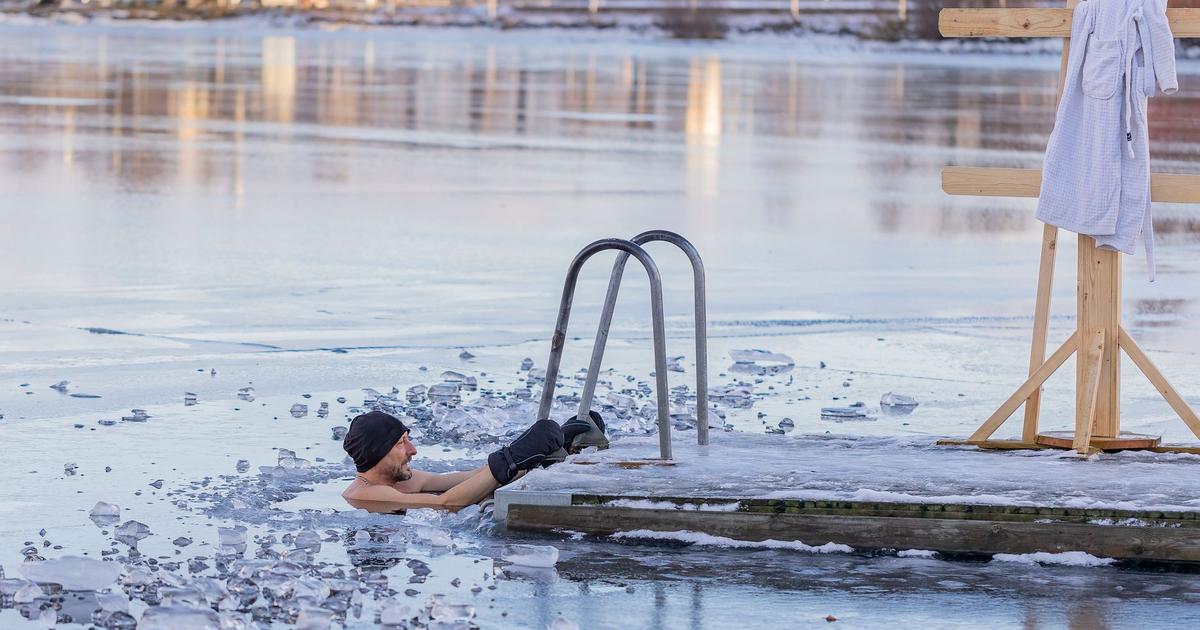
Cold plunge tubs sell on a promise: dump metabolism, hormones, and mood into one tank of ice water. Some of that promise is real, and it shows up fast. Most of it does not survive contact with the actual trials. This is the split, claim by claim, plus the protocol and the cost math.
Medical disclaimer. I am not a physician. This page is personal experimentation and general information, not medical advice. Cold water immersion carries real cardiovascular risk, including for people who don't know they have a heart condition. Talk to your doctor before starting, especially with high blood pressure, arrhythmia, or any cardiac history.
Bottom Line. (1) The fastest, best-supported cold plunge benefit is alertness: a norepinephrine and dopamine surge that hits within minutes. (2) Perceived recovery and reduced soreness after exercise are real, evidence-backed effects. (3) Fat loss, testosterone, and muscle growth claims are overstated. Cold water right after lifting actually blunts hypertrophy. (4) Mood evidence is mixed, not settled, despite marketing that treats it as proven. (5) A cold shower gets you most of the benefit of a plunge tub for close to nothing.
What Cold Water Actually Does to Your Body
The mechanism is a stress response, not a metabolic switch. Sudden cold immersion triggers the "cold shock response." That's a gasp reflex, rapid vasoconstriction, and a spike in heart rate and blood pressure. The sympathetic nervous system fires, and that firing releases norepinephrine and dopamine. That release is where the alertness and mood effects come from. A 2024 review of cold water therapy describes norepinephrine release that "enhances blood circulation" and heightens focus (PMC, 2024, retrieved 2026-09-05). The same review documents an anti-inflammatory effect from reduced cytokine secretion.
This is the same discipline that runs the rest of biohacking for me. Separate what a mechanism plausibly does from what a trial actually measured. Plausible is not the same as proven at a dose you'd use.
Which Cold Plunge Benefits Hold Up
Alertness is the strongest, fastest, and most replicated cold plunge benefit. The sympathetic surge behind the cold shock response is what produces the wake-up feeling. People report it within seconds of getting in, and it ties directly to the norepinephrine release described above.
Perceived recovery after exercise is the second real effect. A meta-analysis of 44 studies, cited in that same review, looked at cold water immersion applied right after exercise. It reduced muscle soreness "regardless of water temperature and exercise protocol" (PMC, 2024, retrieved 2026-09-05). That's separate from whether it helps you build muscle. It does not, more on that below.
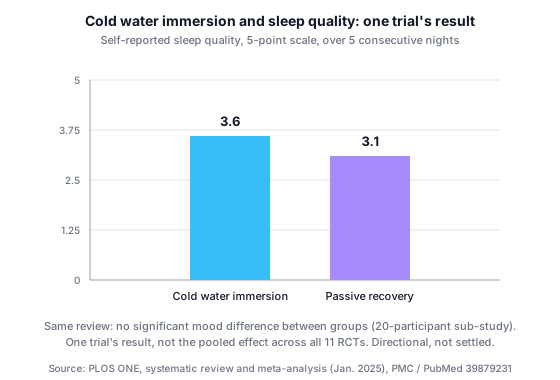
Mood is where the evidence gets inconsistent, and where most cold plunge marketing overclaims. A January 2025 systematic review pooled 11 randomized trials and 3,177 participants (PLOS ONE, 2025, retrieved 2026-09-05). Its mood sub-analysis found no significant difference versus passive recovery. Sleep quality scores were higher for the immersion group in one included trial: 3.6 versus 3.1 on a 5-point scale. Quality-of-life scores were modestly higher at 30 days too, but that effect faded by day 90.
A separate 2026 trial ran three immersion durations in 140 people with low mood (Lifestyle Medicine, 2026, retrieved 2026-09-05). It found a significant improvement in total mood disturbance across the cold-water groups. Read those two together honestly. Mood may improve, but the effect is smaller and less consistent than alertness, and it depends on dose.
The honest way to check any of this on yourself isn't how you feel walking out of the tub. Run a two-week log with hrv tracking against a no-plunge baseline. Same time of day, nothing else changed.
Which Cold Plunge Claims Are Overstated
Fat loss is the most oversold claim in the category. Cold exposure does activate brown adipose tissue and modestly raise energy expenditure through shivering. But the 2024 review is explicit: evidence on meaningful, sustained fat loss "remains limited and inconsistent across studies" (PMC, 2024, retrieved 2026-09-05). A short plunge burns a trivial number of calories next to a walk. Even MD Anderson's own patient explainer agrees (MD Anderson Cancer Center, 2026, retrieved 2026-09-05). Cold plunging "is not a replacement for exercise and a healthy, balanced diet."
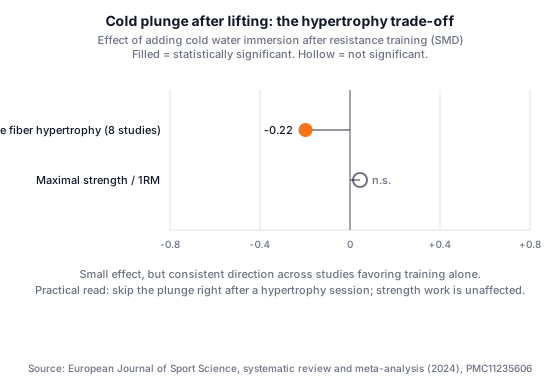
Muscle growth is the claim that actually runs backward. Cold water right after resistance training does not help hypertrophy. It measurably hurts it. A 2024 systematic review of eight studies made the comparison (European Journal of Sport Science, 2024, retrieved 2026-09-05). It compared resistance training alone to resistance training plus cold water immersion. Type II muscle fiber growth was smaller with cold water added, a standardized mean difference of -0.22. Maximal strength gains were not significantly affected either way. If hypertrophy is the goal, put the plunge on a different day, not right after the lift.
Testosterone is the third overstated claim. The direct data doesn't support a durable increase. A randomized crossover study in academy rugby players compared cold water immersion to a control recovery condition after training (PMC, 2024, retrieved 2026-09-05). Testosterone, cortisol, and the testosterone-to-cortisol ratio did not differ significantly between the two. Cold exposure does provoke an acute stress response involving cortisol and norepinephrine. That's a plausible reason some marketing conflates a stress-hormone spike with hormonal optimization. They are not the same thing.
The Protocol the Evidence Actually Supports
Strip the mechanism studies down to what's usable. The protocol is narrower than most cold plunge content implies: water at roughly 50-59°F (10-15°C), for 2-5 minutes, a few sessions a week. MD Anderson's guidance lands close to this. It recommends a 50°F minimum, building from a 30-second first session toward 3-5 minutes (MD Anderson Cancer Center, 2026, retrieved 2026-09-05). The weekly target is around 11-12 combined minutes. Colder and longer is not automatically better. The studies showing benefit used this range, not extreme ones. Repeated exposure over days also measurably blunts the cold shock response itself.
Personal data — pending measurement. This section will carry my own cold plunge log. It will include water temperature, session length, and frequency per week. It will also include the change in resting HRV and next-morning alertness, over a 30-day baseline versus a 30-day intervention, measured on the same wearable. Not filled in yet; I publish it once measured, not before.
Cold Shower vs. Plunge Tub vs. Gym Cold Plunge
The evidence above doesn't require a $4,000 tub. A cold shower gets you into a similar temperature range for a fraction of the cost. None of the trials above required anything more elaborate than immersion or shower-grade cold water.
- Cold shower — Upfront cost $0, ongoing cost $0. Temperature is whatever the tap delivers, often 50-65°F. Best for testing the habit before spending anything.
- Home plunge tub — Upfront cost $300-$6,000+, plus ongoing electricity, chiller, and water-treatment costs. Temperature is precise and repeatable. Best for daily use once the habit is proven.
- Gym or spa cold plunge — $0-$50 a month as a membership add-on, no upfront cost. Temperature is usually fixed by the facility. Best for trying colder water without buying equipment.
If you want to test whether the sleep-quality signal above shows up for you, run it as a two-week experiment. Use whichever option you already have access to. Track it on a best sleep tracker, not just how you remember feeling.
Who Should Skip Cold Plunging
The cold shock response is not a minor inconvenience for everyone. The same 2024 review carries a specific warning (PMC, 2024, retrieved 2026-09-05). Rapid swings in blood pressure and heart rate "could potentially trigger life-threatening cardiac events such as arrhythmias and cardiac arrests." It explicitly advises against cold water therapy for anyone with unstable or uncontrolled cardiac disease. MD Anderson's guidance adds more names to the skip list (MD Anderson Cancer Center, 2026, retrieved 2026-09-05). That includes high blood pressure, existing heart disease, and breathing conditions like asthma. If any of that applies to you, or you don't know your cardiovascular baseline, that's a conversation for a doctor before it's a purchase decision.
How cold does the water need to be for a benefit?
The trials showing real effects used roughly 50-59°F (10-15°C). That's not the near-freezing temperature some plunge marketing implies is necessary. Colder is not a documented multiplier on the benefit.
Is a cold plunge worth doing before a workout aimed at building muscle?
No, based on the current evidence. Doing it right after a hypertrophy-focused session is worse than skipping it. Save the plunge for a separate day, or for sessions where soreness relief matters more than growth.
How often should I cold plunge?
The protocol section above points to a few short sessions per week, in the 2-5 minute range, building up gradually. More frequent exposure builds tolerance to the cold shock response itself. That's a safety benefit as much as a performance one.
Cold plunging earns its place in a recovery toolkit for exactly two things right now: alertness and perceived post-exercise recovery. Treat everything past that as unproven until a better trial says otherwise. If you're deciding which wearable to use to track any of this, I compare the two most common choices in oura vs whoop.
About this guide. Written by Nate Harmon, an operator and self-experimenter documenting personal protocols in biology for Peak Human Ops. Not a physician or a licensed adviser. Sources are tier 1 to 3 journals and peer-reviewed reviews, each linked inline with a retrieval date. Nothing on this page is sponsored, and there are no affiliate links on it. How this site is written and corrected is set out in the editorial policy and the corrections log. Who is behind it is on the about page, and you can contact me directly.