
Biohacking
The Best Sleep Trackers, Ranked for Accuracy Over Features
A sleep tracker ranking built on validated accuracy data, not feature lists: ring, band, mattress sensor, and phone app, tested against real studies.
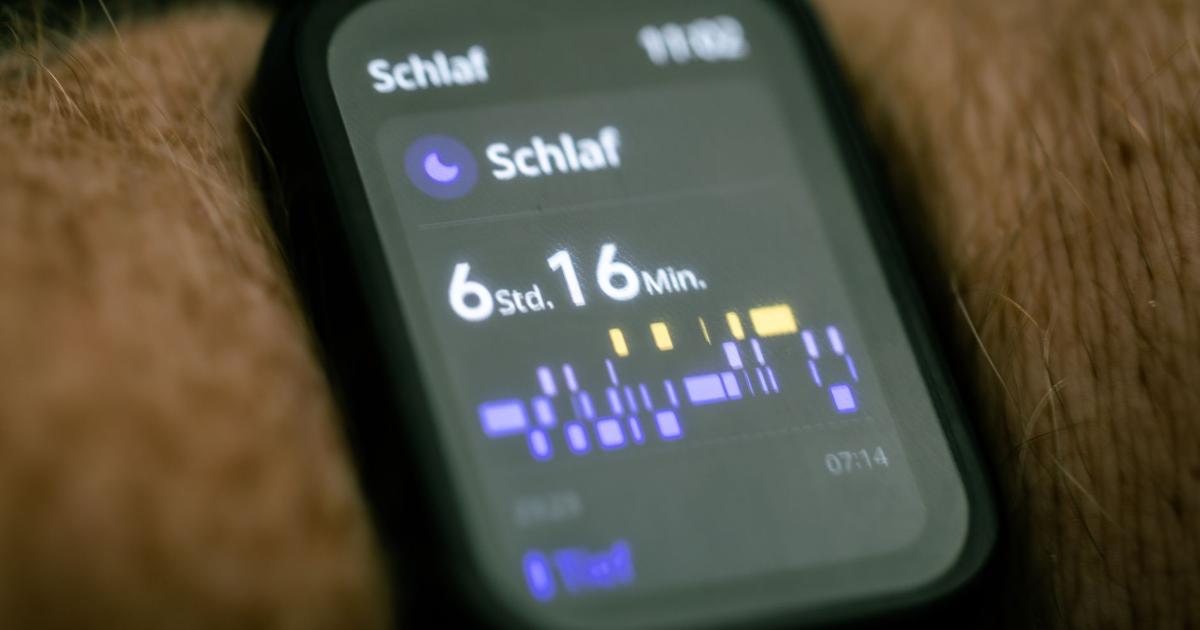
Every "best sleep tracker" list ranks by feature count: more sensors, more app screens, more colors on a chart. None of that tells you whether the number on the screen is real. One prospective study ran 11 consumer sleep trackers against polysomnography on the same nights. The accuracy spread had almost nothing to do with price or brand (JMIR mHealth and uHealth, Lee et al., 2023, retrieved 2026-09-06). This list ranks four device categories the way that study did: by what the data shows, not what the marketing page claims.
Medical disclaimer. I'm not a physician. This is personal research and general information, not medical advice. No device on this list diagnoses or treats a sleep disorder, including sleep apnea. Talk to a doctor before changing your sleep routine based on tracker data, especially if you snore heavily or wake up gasping.
Affiliate disclosure. This post contains affiliate links to some of the products ranked below. If you buy through them, I may earn a commission at no cost to you. That has no bearing on the order below — the accuracy data drove the ranking, not the payout.
Bottom Line. (1) In the one study that tested wearables, a mattress sensor, and phone apps on the same polysomnography nights, a free phone app scored the highest sleep-stage accuracy of all 11 devices. (2) The Oura Ring has the strongest dedicated accuracy record for anyone who will wear a ring nightly. (3) The Withings Sleep Analyzer is the best-validated mattress sensor, with one real weakness: it over-flags being awake as being asleep. (4) The top phone app is the cheapest accurate option, but it has a small user base and paywalls full reports. (5) If you want to fix your sleep rather than measure it, a $0 sleep diary beats every device here.
In this article:
- Why Feature Count Is the Wrong Way to Rank a Sleep Tracker
- Ring vs. Band vs. Mattress Sensor vs. Phone-Only App
- The Ranked Shortlist
- Who Should Buy Which
- Frequently Asked Questions
Why Feature Count Is the Wrong Way to Rank a Sleep Tracker
Spec sheets list heart-rate sensors, skin temperature, and blood oxygen as if more inputs mean a more accurate output. They don't. The 2023 study above tested that assumption directly: 5 wrist wearables, 3 "nearable" bedside devices, and 3 phone-only apps. All ran against 543 hours of lab-grade polysomnography from 75 people (JMIR mHealth and uHealth, Lee et al., 2023, retrieved 2026-09-06). Sleep-stage agreement, scored as macro F1 (a single accuracy score that penalizes both false positives and false negatives equally, so a device can't inflate its score by just guessing "asleep" most of the time) across 349,114 epochs, ranged from 0.69 to 0.26 — and sensor count didn't predict the winner.
A cheap app with a microphone beat an expensive watch with six sensors. The only way to know which device is which is a study that puts them in the same room on the same night, which is what drives every pick below, alongside the biohacking fundamentals that apply before you buy anything.
Ring vs. Band vs. Mattress Sensor vs. Phone-Only App
Four hardware categories compete here, each trading accuracy for a different convenience:
- Ring (Oura and similar): worn 24/7, minimal wrist-motion artifact, needs a charger and a paid membership for trends.
- Band or watch (Whoop, Fitbit, Garmin, Pixel Watch): doubles as a daytime fitness tracker, but strap tightness and motion can degrade the same sensor that reads sleep.
- Mattress sensor (Withings and similar): zero-wear, infers sleep from motion and breathing under the mattress instead of skin contact.
- Phone-only app: no hardware purchase, using the phone's microphone or accelerometer, at the cost of keeping the phone within a few feet of the bed all night.
The chart below shows where the top 5 of the 11 tested devices landed on accuracy, spanning all four categories in one study.

Two wearables from the same study, the Oura Ring 3 and Apple Watch 8, plus the Withings mat and the SleepScore app, landed in the middle of the pack. The study didn't publish their individual scores the way it did the top 5 and bottom 2, so no number is assigned here that can't be verified.
The Ranked Shortlist
1. Oura Ring — Best Overall for Sleep-Specific Accuracy
The Oura Ring has the strongest dedicated accuracy record on this list. A November 2025 systematic review pooled 6 studies covering 388 participants. It found no statistically significant difference between the Oura Ring and polysomnography or actigraphy on total sleep time, sleep efficiency, or wake-after-sleep-onset. The same held for time spent in light, deep, and REM sleep (OTO Open, Khan et al., 2025, retrieved 2026-09-06). The limitation matters: most pooled studies tested healthy adults, so this doesn't extend to diagnosed sleep disorders or advanced age.
Best for: Someone who wants the most independently validated wearable and doesn't mind a ring nightly. Price: $349-$499, plus $5.99/month or $69.99/year for scores and trends (Oura Membership, retrieved 2026-09-06). For the full head-to-head, see oura vs whoop.
2. Google Pixel Watch — Best Band-Style Pick With a Head-to-Head Result
Among wrist wearables in the 2023 study, the Google Pixel Watch and its close cousin the Fitbit Sense 2 scored highest on sleep-stage macro F1. Their scores, 0.567 and 0.581, both beat the study's Galaxy Watch 5 (JMIR mHealth and uHealth, Lee et al., 2023, retrieved 2026-09-06). Google folded the Fitbit sleep engine into the Pixel Watch. As of May 2026, the Fitbit app itself became the Google Health app, carrying the same algorithm under a new name.
Best for: One device for daytime fitness and nighttime sleep. Price: Fitbit Sense 2 lists at $249, often discounted near $199 (Kotaku, 2026, retrieved 2026-09-06). Sleep stage detail requires Google Health Premium, $9.99/month or $99.99/year since the May 2026 rebrand (Android Authority, 2026, retrieved 2026-09-06).
3. Withings Sleep Analyzer — Best Zero-Wear Option
If you won't wear anything to bed, the Withings Sleep Analyzer is the only mattress sensor with a large, dated accuracy study behind it: 89% sleep-wake accuracy and 97% sensitivity in healthy sleepers versus polysomnography across 400+ nights in 183 people, and 81% accuracy and 91% sensitivity in people with a diagnosed sleep disorder (Journal of Sleep Research, Manners et al., 2025, retrieved 2026-09-06).
Its real weakness is specificity: 37% overall, meaning it often scores lying-awake time as sleep. The same study found it overestimated total sleep time by 48 minutes and sleep efficiency by 9 points (Journal of Sleep Research, Manners et al., 2025, retrieved 2026-09-06). Skip it if you're chasing wake-time precision; it's the best-documented zero-wear option for a rough nightly trend.

Best for: Nightly sleep trends with zero hardware to charge or wear, if you mainly care about total sleep time rather than precise wake detection. Price: $129.95, one-time, no subscription required for core analytics (healthcarediscovery.ai, updated May 2026, retrieved 2026-09-06).
4. SleepRoutine — Best Phone-Only App, and the Biggest Surprise in the Data
SleepRoutine is the highest scorer of all 11 devices tested in the 2023 study, wearable or not, with a macro F1 of 0.686 (JMIR mHealth and uHealth, Lee et al., 2023, retrieved 2026-09-06). It works by analyzing breathing sounds through the phone's microphone, no wearable hardware needed — the strongest argument in this post against ranking by feature count: the device with the fewest sensors won.
Two caveats hold it back from an unqualified top pick. Its App Store listing shows only 25 ratings, a small sample for real-world reliability, and full sleep-stage reports sit behind a $4.99/month or $59.99/year subscription on that same listing (Apple App Store, retrieved 2026-09-06).
Best for: Testing whether you even need a wearable before spending $300 on one. Price: Free to download; $4.99/month for full reports.
5. The $0 Option: A Sleep Diary, When You Don't Need Any of the Above
None of the four devices above fix a bad sleep schedule; they only measure it. If the real problem is an inconsistent bedtime, a phone in bed, or late caffeine, a two-week hand-logged sleep diary tells you the same core pattern a $300 device would, at zero cost. The hrv tracking discipline of separating signal from noise applies here before you separate yourself from any money.
Best for: Anyone who hasn't yet fixed the obvious inputs before buying a device to measure the result. Price: $0.
Personal data — pending measurement. This section will carry a 30-day side-by-side log: the Oura Ring, a Withings Sleep Analyzer, and SleepRoutine run on the same nights, plus a manual sleep diary kept in parallel. It will report each device's total-sleep-time estimate against my own logged lights-out and wake times, and how often the three devices agreed within 15 minutes on a given night. Not filled in yet: I publish it once the 30-day log is complete, not before.
Who Should Buy Which
- Wants the most-validated wearable, will wear a ring nightly: Oura.
- Already on Fitbit, or wants one device for training and sleep: Pixel Watch or Fitbit Sense 2.
- Won't wear anything to bed: Withings Sleep Analyzer — accept the 37% specificity tradeoff.
- Not sure hardware is needed yet: SleepRoutine for a few weeks first.
- Testing an intervention like a cold plunge: any accurate device works; consistency matters more than the brand. I ran that exact test writing about cold plunge benefits.
Frequently Asked Questions
What's the most accurate sleep tracker?
The Oura Ring has the strongest independent record, per a 2025 review of 6 studies showing no significant difference from polysomnography in healthy adults (OTO Open, Khan et al., 2025, retrieved 2026-09-06). But in the one study testing a phone app, a mattress sensor, and wearables head-to-head, a free phone app scored the highest raw agreement of all 11 (JMIR mHealth and uHealth, Lee et al., 2023, retrieved 2026-09-06). Both are true; they answer different questions.
Is a sleep tracker app as accurate as a wearable?
In one controlled study, yes — the top-scoring app beat every wearable tested (JMIR mHealth and uHealth, Lee et al., 2023, retrieved 2026-09-06). That doesn't generalize to every app; the same study's lowest scorer was also a phone app. Check for a specific validation study before assuming the category result applies.
Do I need a sleep tracker at all?
Only if the basics are already under control. If bedtime consistency, light, or a phone in bed is the real issue, a two-week sleep diary answers that for free before any purchase is worth considering.
Rank by accuracy, not app-store screenshots. Oura wins the deepest validation record; a free phone app won the one study testing every category at once; a $130 mattress sensor is the best zero-wear option with a known blind spot. For plenty of readers, the right answer is still a notebook by the bed.
About this guide. Written by Nate Harmon, an operator and self-experimenter documenting personal protocols in biology for Peak Human Ops. Not a physician or a licensed adviser. Sources are tier 1-3 peer-reviewed studies, brand pricing pages, and reputable tech journalism, each linked inline with a retrieval date. This post may contain affiliate links, disclosed above the fold. How this site is written and corrected is set out in the editorial policy and the corrections log. Who is behind it is on the about page, and you can contact me directly.