
Biohacking
The Best Supplements for Energy, Ranked by Evidence and Cost
Six energy supplements ranked by evidence tier and cost per effective dose, cutting through the men's/women's marketing repackaging of the same five ingredients.
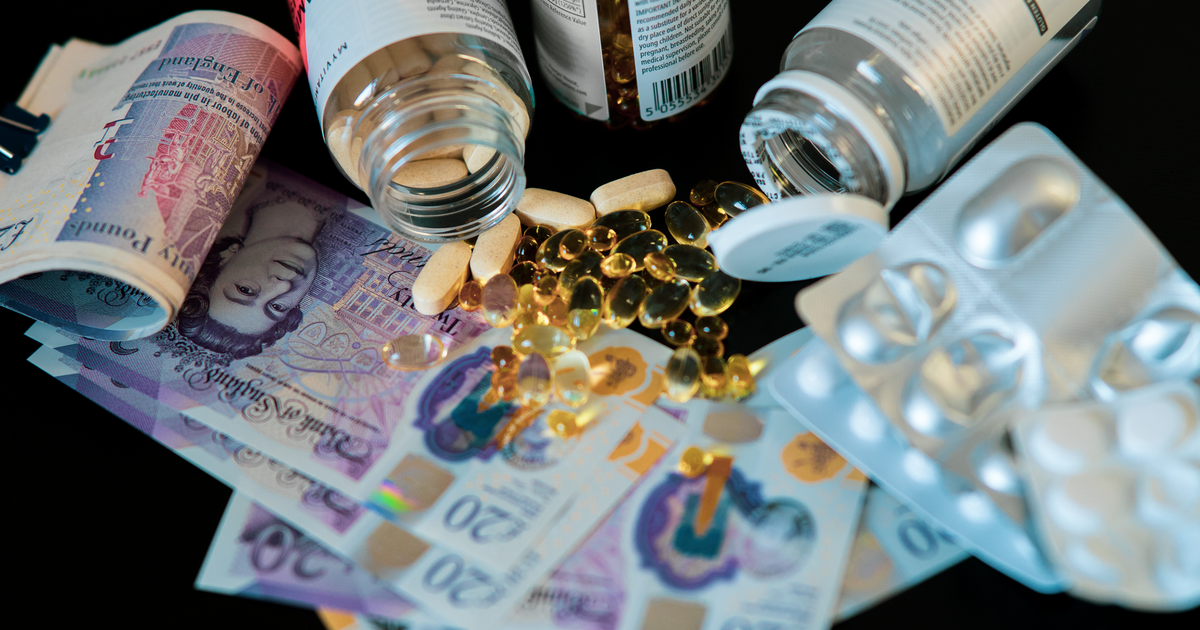
Caffeine, alone or with L-theanine, beats almost everything else on the shelf for cost per effective dose. Creatine is the one true second-tier pick. Everything past that — iron, rhodiola, CoQ10 — only works if you have the specific deficit or condition it treats. Here is the ranked list, the evidence tier behind each pick, and what it actually costs to run.
Medical disclaimer. I am not a physician. This page is personal experimentation and general information, not medical advice. Fatigue has dozens of causes, some of them serious and unrelated to any nutrient gap a supplement can fix. Talk to your doctor before starting any supplement, especially if you take other medications, are pregnant, or have a chronic condition.
Bottom Line. (1) Caffeine has the deepest evidence base of any energy supplement and costs almost nothing — it wins by default unless you have a specific reason to look elsewhere. (2) Adding L-theanine smooths caffeine's jitter and modestly improves attention, for a few extra dollars a month. (3) Creatine is the only other pick with real cognitive-energy evidence, though the effect is domain-specific and not huge. (4) Iron, and to a lesser extent B12, only help if a blood test shows you're actually short — otherwise you're paying for normal urine. (5) Rhodiola and CoQ10 have real but narrow evidence: endurance-linked fatigue and statin-associated muscle pain, respectively, not general tiredness.
In this article:
- Why Most "Energy Supplement" Content Is the Same Five Ingredients
- How I Ranked These
- 1. Caffeine — Tier 1, Best Overall
- 2. Caffeine Plus L-Theanine — Tier 2, the One Combination Worth the Extra Cost
- 3. Creatine Monohydrate — Tier 2, Best for Sustained Mental Energy
- 4. Iron — Tier 1, Conditional on a Real Deficiency
- 5. Rhodiola Rosea and CoQ10 — Tier 3, Best for Narrow, Specific Cases
- Where Caffeine Alone Beats the Stack
- What Actually Differs for Men vs. Women
- Cost Per Effective Dose, Side by Side
- Frequently Asked Questions
Why Most "Energy Supplement" Content Is the Same Five Ingredients
Search "best energy supplements for men" and "best energy supplements for women" and you'll get two lists built from the same five ingredients — B vitamins, caffeine, an adaptogen, iron, CoQ10 — reshuffled and re-captioned by demographic. The underlying biology barely differs by sex. What differs is deficiency risk, and that's a testing question, not a shopping question.
This matters because the repackaging obscures the one thing that actually determines whether a supplement will do anything: whether you have the specific gap it corrects. A cheap stimulant works for almost anyone. A vitamin or mineral only works for the fraction of people who are short on it. Demographic-targeted marketing sells the second kind as if it were the first.
How I Ranked These
I sorted every candidate into an evidence tier, then a rough monthly cost, and ranked on the combination. Tier 1 means multiple RCTs or a meta-analysis with a consistent, dose-dependent effect in a broad population. Tier 2 means real trial evidence, but the effect is smaller, domain-specific, or only shows up in a subgroup. Tier 3 means preliminary or mixed evidence — plausible, not settled.
This is a research-only review: I evaluated the same public trial and meta-analysis data any reader can pull up, not a hands-on personal trial of every ingredient here. Where I do have my own numbers to add, I've flagged it below rather than implying a test I haven't run. Nothing on this list is sponsored, and none of the links in this piece are affiliate links.
1. Caffeine — Tier 1, Best Overall
Caffeine has the largest, most consistent evidence base of anything on this list. The International Society of Sports Nutrition's 2021 position stand puts the effective dose at roughly 3-6 mg per kilogram of body mass (Journal of the International Society of Sports Nutrition, 2021). That dose reliably improves alertness and performance, and some effect shows up at doses as low as 2 mg/kg. For a 75 kg adult, that's roughly 150-450 mg — one to four cups of coffee, or a single 200 mg capsule.
Best for: Anyone without a caffeine sensitivity or sleep problem it would worsen. Cost: Under $5/month for capsules; effectively free if you already drink coffee. Caveat: Tolerance builds within days, and afternoon doses push into evening sleep disruption for a lot of people — including me, past roughly 2 p.m.
2. Caffeine Plus L-Theanine — Tier 2, the One Combination Worth the Extra Cost
Stacking 100-200 mg of L-theanine with caffeine is the one addition on this list I'd actually pay extra for. A 2025 systematic review and meta-analysis of tea-derived compounds found the combination "likely improves performance in attentional tasks" versus placebo, with a small-to-moderate benefit on subjective alertness in the first two hours post-dose (Nutrition Reviews, May 2025). The same review is candid about the limits: most of the attention benefit still traces back to caffeine itself, and confidence intervals on some outcomes can't fully rule out no difference from placebo.
Best for: People who get jittery or anxious on caffeine alone — theanine takes the edge off without blunting alertness. Cost: $10-18/month on top of your caffeine source. Caveat: This is a smoother version of pick #1, not a stronger one; don't expect it to outperform caffeine on raw output.
3. Creatine Monohydrate — Tier 2, Best for Sustained Mental Energy
Creatine's case for energy is cognitive, not just muscular. A 2024 systematic review and meta-analysis of 16 randomized trials (492 adults) found creatine supplementation produced a significant, moderate-certainty improvement in memory (standardized mean difference 0.31) and lower-certainty gains in attention time and processing speed (Frontiers in Nutrition, July 2024). Overall cognitive function and executive function showed no significant change — the effect is real but domain-specific, not a global energy switch.

At the standard 3-5 g/day maintenance dose, this is also the pick with the best-established safety record of anything on this list, including creatine's use beyond the gym for pure strength training. Best for: People who want a durable, once-daily addition rather than an acute stimulant. Cost: $8-15/month for plain monohydrate powder. Caveat: The cognitive effect is smaller than caffeine's and takes weeks of loading to show up — it's not a same-day fix.
4. Iron — Tier 1, Conditional on a Real Deficiency
Iron is the clearest example of the demographic-marketing pattern the intro calls out, and also the clearest case where testing beats guessing. In one cohort of 35 menstruating women with confirmed iron-deficiency anemia, 20.6% reported intense fatigue at baseline; that fatigue, along with headache and other nonhematological symptoms, resolved after iron treatment in the same group (Women's Health Reports, Jan. 2020). That's a real, strong effect — but it's an effect of correcting a deficiency, not of iron as a general stimulant.

Best for: Anyone with a blood test confirming low ferritin or iron-deficiency anemia — disproportionately menstruating women, but not exclusively. Cost: $5-10/month, plus the cost of the blood panel. Caveat: Supplementing without a confirmed deficiency does nothing for energy and can cause GI side effects; this is the "occasionally iron" exception to the mostly-sex-doesn't-matter rule, and it's a testing question, not a men's-vs-women's-formula question.
5. Rhodiola Rosea and CoQ10 — Tier 3, Best for Narrow, Specific Cases
These two don't deserve a general "energy" recommendation, but each has a real, narrow use case. A 2025 meta-analysis of 26 randomized trials (668 participants) found rhodiola improved VO2max and time-to-exhaustion (Frontiers in Nutrition, Sept. 2025). The strongest effects showed up at doses above 600 mg/day in trained individuals. That's an endurance-performance finding, not a general-fatigue one, and rhodiola had no measurable effect on inflammatory markers in the same analysis. CoQ10's best-supported use is statin-associated muscle pain. A 2025 meta-analysis of 7 randomized trials (389 patients) found a significant reduction in muscle pain scores at 100-600 mg/day (Journal of Nutritional Science, Oct. 2025). The authors flagged high heterogeneity between the trials and called for more research before treating it as settled.
Best for: Rhodiola if you're chasing endurance-specific fatigue at controlled training volume; CoQ10 if a statin is causing muscle pain your doctor hasn't yet resolved another way. Cost: $15-25/month for rhodiola, $20-40/month for CoQ10 (ubiquinol costs more than ubiquinone). Caveat: Neither is a good general-purpose energy pick — you're paying tier-3 evidence prices for a tier-1 problem that isn't yours unless it specifically applies.
Where Caffeine Alone Beats the Stack
If your only goal is maximum alertness for minimum cost, skip the stack. Caffeine alone (#1) has a larger, more consistent evidence base than the caffeine-plus-theanine combination (#2), and every dollar spent on theanine buys smoothness, not extra output. The stack earns its place only if plain caffeine already gives you anxiety, a racing heart, or a crash you're trying to avoid — in which case the few extra dollars a month are worth it for tolerability, not performance.
What Actually Differs for Men vs. Women
Almost nothing in the underlying biology. Caffeine, creatine, rhodiola, and CoQ10 work the same way regardless of sex — the "for men" and "for women" versions of these products differ mainly in packaging, dose framing, and price, not formulation. Iron is the one real exception: menstruating women lose iron monthly that men and postmenopausal women don't, which raises baseline deficiency risk in that group specifically. Even there, the fix isn't a "women's formula" — it's a ferritin test, which tells you whether you're actually in the 20-30% of menstruating women who run low, rather than assuming you are because of a label.
Cost Per Effective Dose, Side by Side
Ranked by monthly cost for a typical effective dose, cheapest to priciest, this list runs: caffeine, iron, creatine, the caffeine-plus-theanine stack, rhodiola, then CoQ10. The cheapest and best-evidenced options are the same options — caffeine and, conditionally, iron — which is the opposite of what most "premium" energy-stack marketing implies.

Personal data. I'm not actually on this list's cheapest option: consumer genetic testing (24Genetics, CYP1A2 variant) flagged me as a slow caffeine metabolizer, meaning a normal dose sits in my system longer and raises the odds of the jitteriness and sleep disruption this article warns about — so caffeine isn't in my stack at all. Worth saying plainly: a direct-to-consumer panel like this isn't diagnostic-grade the way the blood tests this article recommends elsewhere are; it's a personal input I'm acting on, not a clinical result. Creatine (10 g/day) is in my stack, alongside magnesium bisglycinate, zinc, and B12 — same caveat applies to the B12, which I take without a confirmed deficiency, unlike the test-first rule this article argues for. Roughly €100/month combined across the full stack. I haven't run a formal outcome test tying that spend to a specific energy metric on my Whoop yet — that's the honest gap, not a number I'll paper over.
If focus rather than raw energy is the actual goal, the ranking changes — see nootropics for focus for that separate evidence review. And if your fatigue tracks with poor sleep rather than daytime energy specifically, magnesium for energy and sleep covers a candidate this list deliberately leaves off, since its strongest evidence is sleep-linked, not a direct energy effect.
Frequently Asked Questions
Do I need a B12 supplement for energy too? Only if a blood test shows you're actually deficient. I cover the test to run, the cutoffs, and why supplementing without deficiency does nothing measurable in B12 for energy — the same logic that applies to iron here applies there.
Is it safe to combine caffeine, creatine, and iron at the same time? There's no known interaction problem between the three at standard doses, but "safe to combine" isn't the same as "all three apply to you." Add creatine and caffeine by default; add iron only after a blood test confirms you need it.
Why isn't a multivitamin on this list? Because a multivitamin's B-vitamin and mineral doses target people who are already replete, not people who are deficient. If you're not short on anything specific, a multivitamin is a rounding error on your energy, not a fix — the same "expensive urine" problem that applies to standalone B12.
This is the same test-before-you-spend approach that runs the rest of biohacking for me: rank by evidence, price the effective dose, and skip anything that only works if you already have the specific gap it treats. Caffeine wins on cost and evidence together. Everything else earns its spot only for the narrower case it actually fits.
About this guide. Written by Nate Harmon, an operator and self-experimenter documenting personal protocols in biology for Peak Human Ops. Not a physician or a licensed adviser. Sources are tier 1-2 peer-reviewed journals and meta-analyses, each linked inline with a publication date. Nothing on this page is sponsored, and there are no affiliate links on it. How this site is written and corrected is set out in the editorial policy and the corrections log. Who is behind it is on the about page, and you can contact me directly.