
Biohacking
Creatine for Energy and Focus, Not Just the Gym
The cognitive and cellular-energy case for creatine, outside of muscle-building: dosing, timing, safety, and the myths that don't hold up.
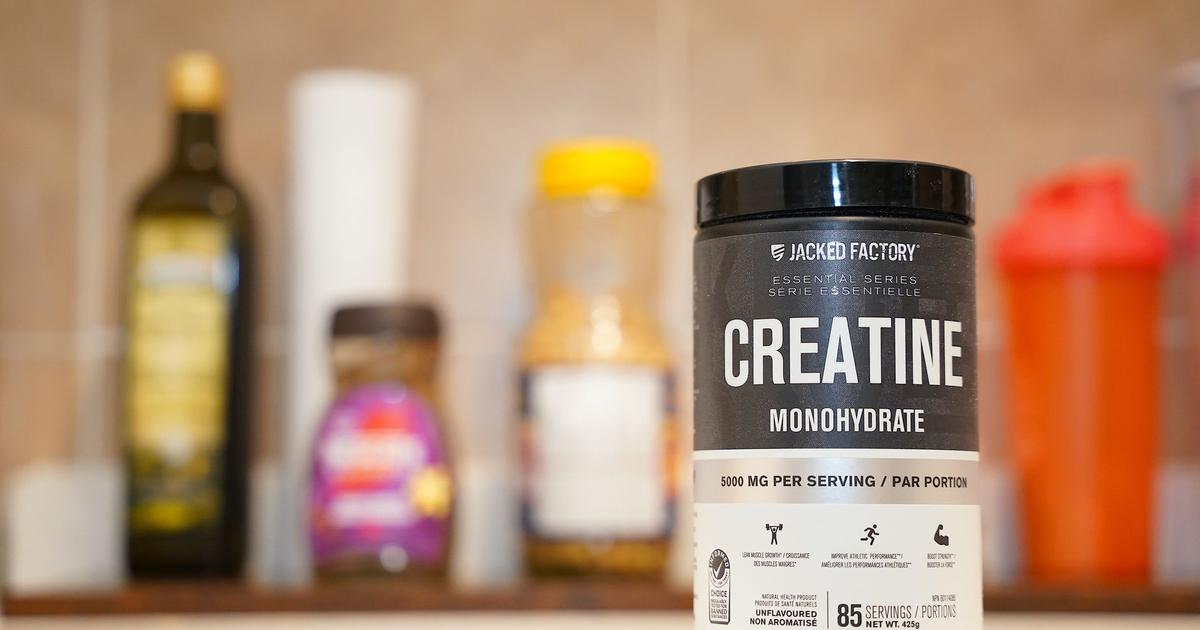
Creatine is not a gym supplement that happens to help your brain a little. It is a cellular-energy compound that happens to also build muscle, and I take it for the brain and cognitive-energy effect, not for size. Here is the mechanism, the dosing that applies if you never touch a barbell, and the safety picture without the bodybuilding-forum noise.
Medical disclaimer. I am not a physician. This page is personal experimentation and general information, not medical advice. Talk to your doctor before starting any supplement, especially if you have kidney disease, are pregnant, or take other medications.
Bottom Line. (1) Creatine regenerates ATP through the phosphocreatine system, and the brain runs on the same system muscle does — this is why the cognitive effect is real and not marketing. (2) The strongest cognitive evidence is domain-specific: memory and processing speed move, overall cognition and executive function mostly don't. (3) A single high dose (0.35 g/kg) measurably offset cognitive decline from acute sleep deprivation in a 2024 trial — a genuinely different use case than daily maintenance dosing. (4) Standard maintenance dosing (3-5 g/day) reaches full saturation in 3-4 weeks with no loading phase, or in about a week if you load. (5) The kidney-damage myth doesn't hold up in healthy adults at these doses; the real, common side effect is mild GI upset or water weight, not organ damage.
The Mechanism, in One Paragraph
Creatine's whole job is regenerating adenosine triphosphate (ATP), the molecule every cell spends to do anything. Stored as phosphocreatine, it donates a phosphate group back to spent ADP, rebuilding ATP faster than your body can make it from scratch through normal metabolism. Muscle uses this system during short, intense effort. The brain uses the identical system during any cognitively demanding task, which is why supplementing creatine raises brain phosphocreatine stores measurably, not just muscle stores. That single shared mechanism is the entire cognitive case for creatine — it is not a stimulant, a nootropic in the caffeine sense, or anything that acts on neurotransmitters directly.
The Cognitive Evidence — Not the Gym Evidence
The pooled evidence is already covered in the best supplements for energy ranking: a 2024 meta-analysis of 16 randomized trials in 492 adults found a significant, moderate effect on memory (standardized mean difference 0.31) and a larger effect on processing speed, with no significant change in overall cognition or executive function (Frontiers in Nutrition, 2024, retrieved 2026-09-06). I won't re-run those numbers here. What's new in this post is the condition under which that effect gets sharpest: an energy-depleted brain.
A 2024 randomized, placebo-controlled crossover trial gave 15 healthy adults a single 0.35 g/kg dose of creatine monohydrate (roughly 25 g for a 70 kg adult) during 21 hours of sleep deprivation, then tracked cognitive performance and brain phosphocreatine directly. Word memory improved by 10.3%, and processing speed on language, logic, and numeric tasks sped up by 16-29% relative to placebo. The effect started at 3.5 hours, peaked around 4 hours, and was still present at the last measurement, 9 hours after dosing (Scientific Reports, Feb. 2024, retrieved 2026-09-06). That single dose is roughly five to eight times a normal daily maintenance dose — a deliberate, one-off load, not a pattern to repeat nightly.

That result doesn't mean creatine reliably outperforms in well-rested brains. A larger, better-controlled 2023 trial gave 123 participants (about half vegetarian, half omnivore) 5 g/day for six weeks and found only a weak, borderline effect on working memory and no effect on abstract reasoning — smaller than the older, widely cited vegetarian-specific studies suggested, and no bigger benefit for vegetarians specifically (BMC Medicine, 2023, retrieved 2026-09-06). Read both trials together and the honest summary is: daily dosing gives a small, domain-specific edge; acute high-dose creatine under sleep debt gives a larger, more reproducible one. Size your expectations to the situation you're actually in.
Dosing and Timing If You're Not Training for Strength
For the cognitive-energy use case, you don't need a bodybuilder's protocol. Two options, both validated in the sports-nutrition literature:
- No loading phase: 3-5 g/day, taken any time, reaches full muscle and brain saturation in about 3-4 weeks.
- Loading phase: 20 g/day split into four 5 g doses for 5-7 days, then drop to 3-5 g/day maintenance. This saturates in about a week. It's only worth it if you want the effect sooner and don't mind more GI load during that first week.
Both protocols land at the same steady-state creatine level after a month; loading just gets you there faster (International Society of Sports Nutrition position stand, 2017, retrieved 2026-09-06). Timing relative to meals or time of day has no established effect on the cognitive outcome — consistency matters, the clock hour doesn't.

The sleep-deprivation case above is worth planning around deliberately. A single larger dose (the trial used 0.35 g/kg) before a known bad-sleep stretch — a red-eye flight, an all-nighter, a newborn — is a different decision than your daily maintenance dose. I treat it as an occasional tool, not a daily habit.
Personal data — pending measurement. This section will carry my own test of a pre-flight 20-25 g single dose against a standard 3 g/day baseline, measured with a simple reaction-time and n-back app before and after a red-eye, cross-referenced against my Oura sleep debt score. Not filled in yet; I publish it once measured, not before.
Side Effects and Who Should Skip It
The most common real side effect is gastrointestinal: cramping or looseness, almost entirely from single doses above roughly 10 g. Splitting any dose above 5 g into smaller servings largely resolves it (Frontiers in Nutrition, Dec. 2025, retrieved 2026-09-06). The other reported effect, water retention, is real but not the harmful "bloating" framing it gets online — it's intracellular water that appears to support thermoregulation, not fluid trapped under the skin. In the 2023 BMC Medicine trial, 17% of participants reported a negative side effect on creatine versus 4% on placebo, mostly GI symptoms and minor weight gain from that water shift. That's a real but modest rate — not a rare fluke, and not a common problem either.
The kidney-damage claim is the myth that won't die, and it doesn't hold up in healthy adults. The 2025 safety review found no evidence of renal impairment across studies that used kidney-function markers independent of creatinine. The 2017 ISSN position stand reported no meaningful renal differences after doses as high as 20 g/day for 5 days followed by 5-10 g/day for 21 months. Elevated serum creatinine on a blood panel after starting creatine reflects higher creatine turnover, not kidney injury. Mention it to your doctor if you're being monitored, so the number isn't misread. Skip it, or check with a doctor first, in three cases: existing kidney disease, pregnancy or breastfeeding (the evidence here is simply too thin, not evidence of harm), or medications that already stress the kidneys.
Why I Cover This Here, Not as a Bodybuilding Supplement
Every top-ranking page on this topic — Cleveland Clinic, the major hospital-system blogs — covers creatine through a general-health or fitness lens, muscle first, brain second as an aside. That's the wrong order for this site's audience. The biohacking system I run here treats every intervention as a measured line item, and creatine's ROI case for an operator isn't bigger biceps — it's a cheap, well-studied lever on memory and processing speed under exactly the kind of fatigue this audience runs on. If focus rather than raw cognitive-energy is the actual target, nootropics for focus covers that adjacent, evidence-graded category directly, and if your fatigue is more sleep-linked than energy-linked, magnesium for energy and sleep is the more targeted read.
Creatine earns its spot here for the same reason caffeine and a fixed wake time do: it's cheap, the evidence is real even if modest, and it doesn't require you to be lifting anything heavier than a coffee cup.
About this guide. Written by Nate Harmon, an operator and self-experimenter documenting personal protocols in biology for Peak Human Ops. Not a physician or a licensed adviser. Sources are tier 1 to 3 journals and peer-reviewed reviews, each linked inline with a retrieval date. Nothing on this page is sponsored, and there are no affiliate links on it. How this site is written and corrected is set out in the editorial policy and the corrections log. Who is behind it is on the about page, and you can contact me directly.